
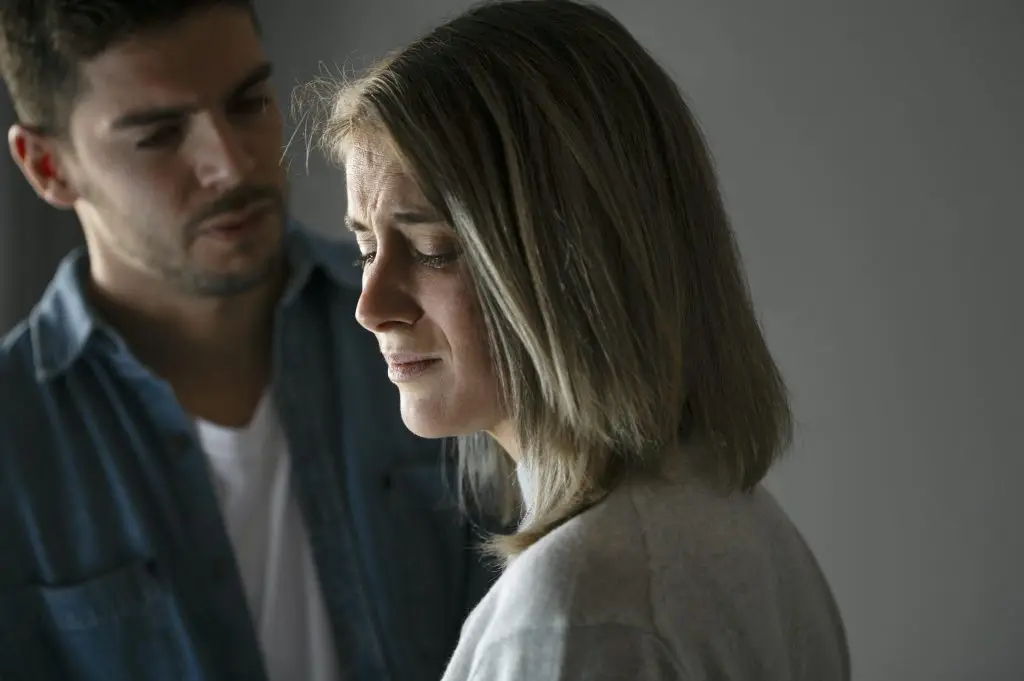
I led a Social Justice and Social Security Committee debate on financial considerations when leaving an abusive relationship.
Below you can find my opening and closing remarks
Opening speech
On behalf of the Social Justice and Social Security Committee, I am pleased to open the debate. Before I discuss the substantive issues that the committee explored as part of its inquiry into financial considerations when leaving an abusive relationship, I first thank the individuals and organisations who enriched our work on the topic.
The committee’s inquiry began by engaging with the Scottish Women’s Aid survivor reference group—a group of women who have experience of domestic abuse and coercive control. That engagement was invaluable to the inquiry’s work, and I put on record my thanks, on behalf of the whole committee, to the participants for their time and their willingness to share their experience with us. I also thank Financially Included, which is an Easterhouse-based organisation that supports women who have experienced economic abuse.
Financially Included hosted the committee before we started taking formal oral evidence and provided a perspective that it is really only possible to gain by speaking with front-line staff about what they actually experience. We heard from our discussions with the survivor reference group that, although Financially Included consists of only a tiny team, they are amazing; I am pleased to put that on record this afternoon.
Evidence that was provided by individuals and stakeholders was essential in helping committee members to reach the conclusions and recommendations that are detailed in the report. We hope that those reflect the broad societal response that is needed to tackle economic abuse. One in five women across the United Kingdom are either experiencing economic abuse at the hands of a current or former partner or have experienced it in the past 12 months.
We made a number of recommendations for the Scottish Government, which must take a leading role in supporting those who have faced such abuse. The committee is extremely pleased that the Government is investing £1 million in a new national fund to leave for 2025-26. We heard great things about the pilots, and we heard that the Government is committed to making the fund permanent. It is particularly welcome that that support will be open to those with no recourse to public funds—as the committee heard, people in that group face greater challenges in leaving abusive relationships as a result of their extremely limited access to sources of financial support.
Where it was piloted, the fund to leave supported more than 500 women and was widely supported by stakeholders. Citizens Advice Scotland said that the fund offers
“the deep psychological reassurance that comes from knowing that there is a cushion available to get yourself restarted in order to have a safe future”.—[Official Report, Social Security and Social Justice Committee, 15 May 2025; c 13.]
Providing money to enable victims/survivors to leave abusive relationships is vital; however, so is ensuring that we are not punitively taking money away from them. Aberlour Children’s Charity described the system of public debt collection in Scotland as “very aggressive” and said that it further traps people in debt. However, the committee heard that practice varies widely across local authorities. There is good practice out there, and some councils are willing to write off debt. With that in mind, we want local authorities to take a consistent and trauma-informed approach when pursuing debt from victims of domestic abuse that takes account of their specific needs. We ask that the Scottish Government and the Convention of Scottish Local Authorities work together to make that happen.
We welcome the Scottish Government’s investment in increased debt advice provision for those who are in council tax arrears, as well as its development of resources to support best-practice principles for council tax collection. When someone is fleeing a dangerous situation, safe accommodation is an immediate concern. However, if someone is in council tax or rent arrears, that can be a barrier to finding somewhere new to live. That must be addressed. We ask the Scottish Government to work with COSLA to ensure that fear of being made to repay such debts does not prevent someone from leaving an abusive relationship.
It is appalling to think that people are trapped with abusers because debt means that they cannot afford to leave. We therefore welcome provisions in the recently passed Housing (Scotland) Bill for social landlords that suspect that domestic abuse is contributing to rent arrears to take action to support the victim/survivor’s needs. We have also called for those provisions to be applied to the private rented sector. The lack of suitable and safe accommodation options for those who are escaping abuse urgently needs to be addressed.
The issues facing those who experience economic abuse are varied and complex. We therefore welcome the Scottish Government’s comprehensive equally safe strategy to address violence against women and girls. However, stakeholders highlight that improvements could be made to further recognise in the strategy the impact of economic abuse. Financially Included recommends that the strategy should include specific actions to cover issues relating to public sector debt, housing costs and legal expenses.
The information that is available to victims/survivors also needs to be improved. The Glasgow violence against women partnership emphasised the fact that a woman will contact up to 11 services before she gets the information that she needs. That should not be the case.
Scottish Women’s Aid told the committee that a whole-system response for advice and information is required. Access to legal advice and representation is also essential when someone is leaving an abusive relationship, but we heard that that is not always available. I highlight the Equalities, Human Rights and Civil Justice Committee’s recent inquiry into civil legal assistance, which concluded that there is an urgent need for action to improve the delivery of civil legal assistance.
During our inquiry, the Social Justice and Social Security Committee heard about a number of issues with the legal aid system. In the time that is available to me, I will discuss some of the most pressing concerns. Eligibility for legal aid was a significant concern that members of the survivor reference group raised. The Scottish Legal Aid Board told us that solicitors have the ability to exercise discretion when it comes to financial assessments, but there is a lack of awareness of that discretion, which means that victims/survivors are missing out on the legal support that could make all the difference to their cases. We asked the Scottish Legal Aid Board to address that as a matter of priority and to raise awareness of that discretion in the legal profession and with the public.
The committee heard that arrangements for means testing for advice and assistance are more restrictive than they are for civil legal aid. Along with the Equalities, Human Rights and Civil Justice Committee, we have called for the financial thresholds to be reviewed. We also called on the Scottish Government to work with the profession on the fees that are paid to firms for legal aid, given that we heard that the amounts that are awarded are insufficient and can make it difficult to offer a trauma-informed service to victims/survivors.
Following the publication of our committee’s report, the Scottish Legal Aid Board wrote to the committee to respond to the recommendations. We are pleased that the agency has committed to working with stakeholders to create a more responsive and user-focused system for the future—time will tell—and that that will include enhanced training and support for solicitors and applicants.
The Regulation of Legal Services (Scotland) Act 2025, which was passed in June, introduced provisions to widen access to legal services, which the committee welcomes. It will be important to monitor how effective those changes are. During the debate, it would be helpful to hear progress updates from the minister on the committee’s recommendations to the Scottish Government.
The financial barriers to leaving an abusive relationship can be exacerbated by the welfare and benefits system. Best practice needs to be shared between the United Kingdom Government, the Department for Work and Pensions, the Scottish Government, Social Security Scotland and local authorities. The five-week wait for universal credit is a huge barrier to those who are fleeing domestic abuse, and that wait should end.
There should be a joint group that is led by the Scottish Government. My apologies that my words on this are not precise, because I am doing this from memory rather than from my script, but the committee believes that a group should be convened—to be led by the Scottish Government and to include the UK Government and other partners—to find a way forward that will remove all those financial barriers for women as they leave an abusive relationship. If the will is there, it can be done.
I will make other observations on the committee’s recommendations in my closing comments but, for now, I look forward to hearing from other members.
I move,
That the Parliament notes the Social Justice and Social Security Committee’s 6th Report, 2025 (Session 6), Inquiry Into Financial Considerations When Leaving an Abusive Relationship (SP Paper 849).
My closing speech
As is traditional, I thank all members for their excellent contributions, but it was remiss of me at the start not to also thank our committee’s clerking team, particularly Halla Edwards-Muthu, and the Scottish Parliament information centre, particularly Camilla Kidner, for their excellent work. We are lucky to have such professionals in the Parliament supporting us with our committee reports—I want to put that on the record.
I also want to put on the record something that did not come up in the debate and which I did not mention in my opening speech, which is the issue of inconsistent responses by police officers to allegations of financial abuse and coercive control. That key issue was raised by some members of the survivor reference group. The committee welcomes Police Scotland’s commitment to develop training for officers on identifying and understanding economic abuse and consider opportunities to collaborate with the financially included project, which has raised concerns. I put that on record on the basis that, if victims/survivors have told us that that is an issue, they should hear that said in the Parliament this afternoon.
Marie McNair reinforced the calls that I made in my opening speech for the Scottish Government to take a lead in working together with the UK Government, the DWP, Social Security Scotland, COSLA and other partners to share best practice. I hope that the Scottish Government will drive that forward, irrespective of political differences. There is no political difference when it comes to supporting women who are fleeing violence or economic abuse, and so I hope that such working together will happen.
We also heard a lot about financial barriers; the five-week wait for universal credit is clearly one such barrier.
A theme that has shone right through the debate, and which we heard about in the minister’s closing comments, is the further actions that are required on legal support. I welcome the minister’s comments, but Karen Adam was right to talk about legal assistance deserts. More has to be done, and the committee is right to be frustrated. Pam Gosal and Maggie Chapman spoke about the search for lawyers. Some women, particularly in more remote or rural areas, have had to call up to 50 lawyers to get someone to take on their case. There is sometimes not an equality of arms for women when they seek legal representation, so the Government has to go further on that.
There is always a need for clear information, awareness and support. That is another theme that shone through the debate. I thank Alexander Stewart for saying that having a single point of contact in local authorities would aid in this endeavour, as was recommended by the committee. Carol Mochan spoke about low levels of awareness of equally safe among victims/survivors and the need to have support available in a physical form, perhaps in education settings and elsewhere. That point was reinforced by Beatrice Wishart, and it is important to put it on the record.
I thank members who stressed that economic abuse is not simply a consequence of domestic abuse but a thing in and of itself. Maggie Chapman said that it was a specific instrument of control, and Jackie Dunbar, in a very impassioned and personal speech, for which I thank her, said that it was part of a systematic pattern of abuse. She shared a story from one of her constituents, and Paul McLennan chimed in on that point. Awareness has to grow more generally of what economic abuse and control actually is.
During the debate, we had an inadvertent and accidental demonstration that there is good cross-Government working taking place on economic abuse. Paul McLennan mentioned his involvement in developing the new fund to leave during his time as Minister for Housing. Kaukab Stewart has been pushing forward on that as the equalities minister, so there is clearly joined-up working taking place. More of that would be nice, but it is happening, so that is good to put on the record. Kaukab Stewart also said that 1,800 more women are expected to benefit from the new fund to leave, which is a hugely positive thing.
There was a discussion about whether the Scottish Government is delivering enough. It is always the Parliament’s job to push the Scottish Government to go further. Frankly, whether we are SNP back benchers, committee conveners or members of the Opposition, we should all absolutely do that.
Equally safe is supposed to be the delivery strategy. Therefore, I expect the Scottish Government to think carefully about the recommendations from both committees and about how to ensure that the strategy will not just be warm words—I am sure that it will not be—but will have tangible, deliverable actions, with budgets beside them, to deliver many of the outcomes in the reports, which we have mentioned in the debate. There is much more to be done on that.
We heard that there is much more to be done in relation to the benefits system—not just by the UK Government on universal credit but by the Scottish Government and COSLA and local authorities more generally.
There is much more to be done in relation to public sector debt—that point shone right through the entire debate. There is good work happening in relation to the Housing (Scotland) Bill, but much more needs to be done on that, as well as on access to legal support.
I get the feeling from the debate that this is a clear and sincere collective endeavour by the Government and the Parliament and by political parties of every persuasion. All I hope is that, in the new parliamentary session—some of us will be here; some of us will not—we can garner that collective endeavour by the Government, the Parliament and members across parties.
It is only through such collective endeavour, when we agree budgets and strategies in this place, that we can meet the needs and aspirations of the victims/survivors who our committee spoke to, who were eloquent and impassioned in talking about their experiences—I thank them once more for that. I also thank the people providing front-line services on the ground, such as those at the financially included project, who work day in, day out supporting victims/survivors.
Let us come together in this place—the Parliament, the Government and members across parties— not just this afternoon but in the new parliamentary session to meet the needs of all those who find themselves to be victims of economic abuse. That is right for victims/survivors. More importantly, we need to do preventative work so that women can leave an abusive relationship at the earliest signs and are not trapped because of financial barriers.